The same data is typed twice.
An order entered in one system is entered again in the accounting software, and corrected in both when it changes.
Custom builds · Integrations
We connect the tools you already run: ERP, accounting, banks, telematics, marketplaces and the system someone built in-house ten years ago. Data moves in both directions, and somebody is watching when it does not.
Why integrate
An order entered in one system is entered again in the accounting software, and corrected in both when it changes.
The regional exchange, the local ERP or the in-house system is not on anyone’s list of connectors.
A connection stops on a Friday, and you find out on Wednesday, from a client.
What we connect
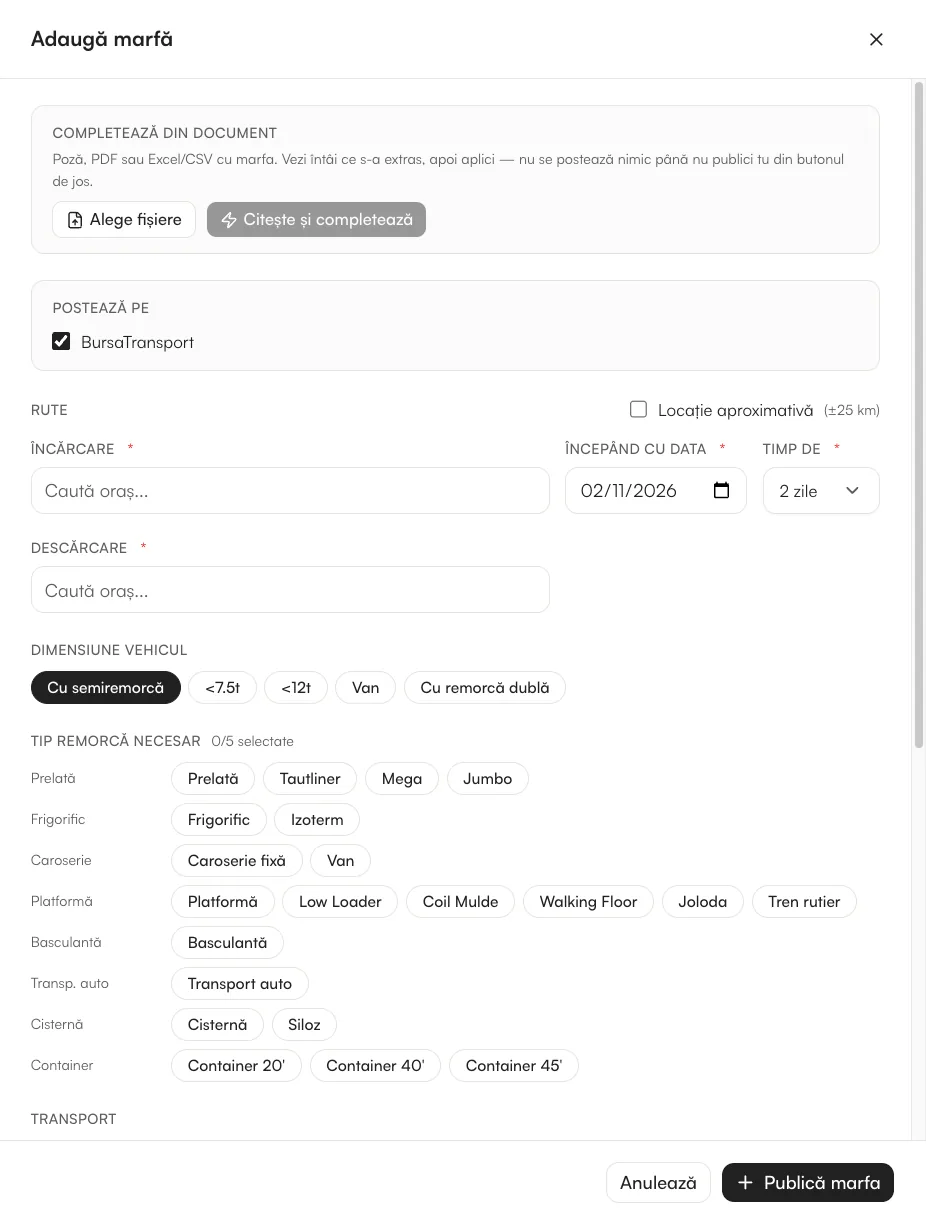
In transport, that means TimoCom, Trans.eu, BursaTransport, 123cargo and Cargopedia from one table. The same pattern applies to any marketplace your industry sells on.
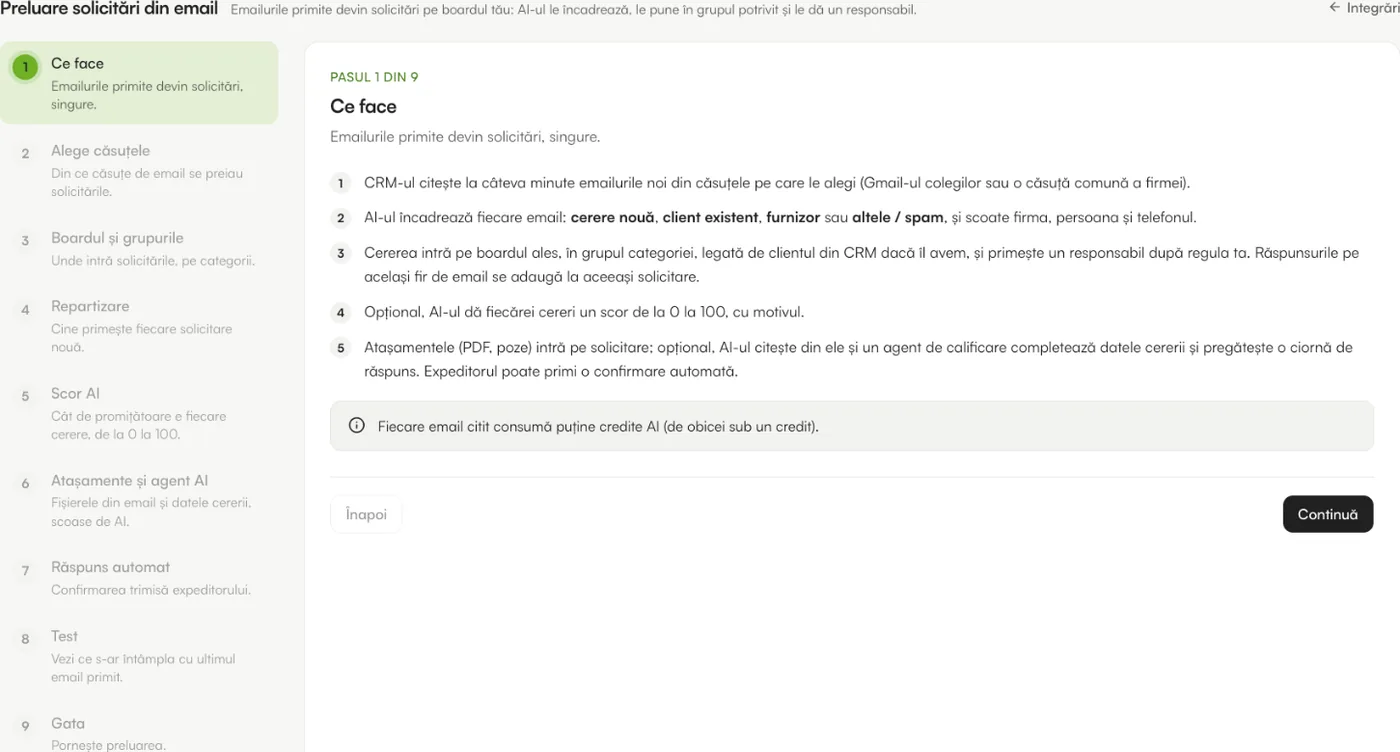
Gmail, Outlook / Microsoft 365, IMAP mailboxes, WhatsApp Business and the forms on your website feed the system directly, with duplicates recognised and attachments kept.
Webfleet, Wialon and Frotcom feed truck positions onto the map every five minutes. The same approach connects other tracking systems, sensors or equipment that expose their data.
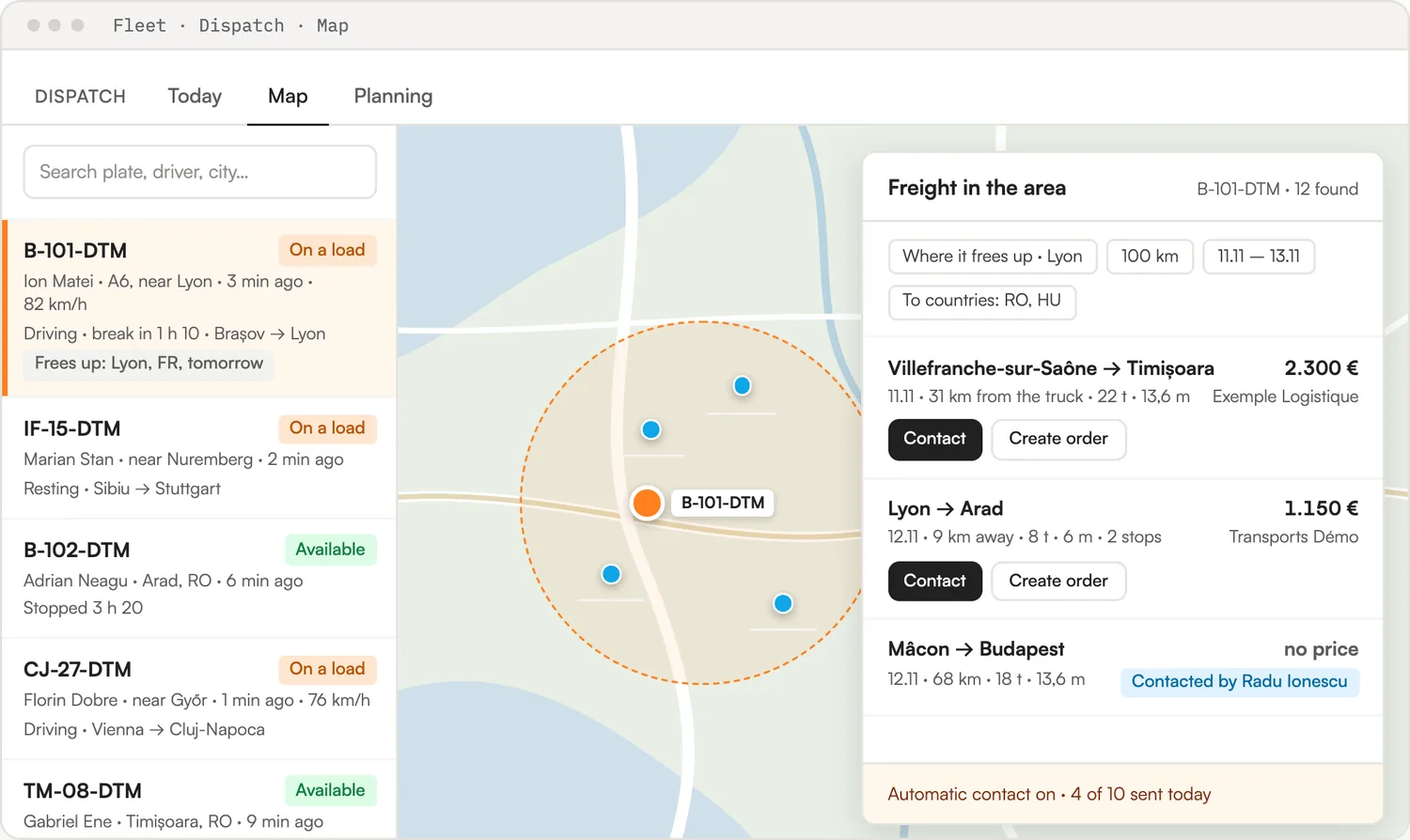
Screens are from the platform, with sample data. Some show the Romanian interface; the app also runs in English.
Finance and administration
Some are standard in the platform; others we build to your accounting system and your country.
Invoices issued from the order through SmartBill or Billingo, with storno and numbering.
Romanian e-Factura fetched from ANAF SPV and checked; other national systems as custom work.
Statements read and payments matched to invoices, proposed for approval.
Stripe card payment links from the order, with the payment recorded.
Two-way sync with your ERP or accounting software, through its API, database or exports.
Company details and financial rating filled in from public registers, where they exist.
How it works
What it is, what it can expose (API, database, files) and which data must move.
A fixed proposal: fields, direction, frequency, error handling and price.
Against a test environment first, then on real data with you watching.
Failures raise an alert and are retried; the connection is maintained with the platform.
Questions
Usually, yes. If your system can talk to anything (an API, a database, a file export), we can build a two-way connection. Tell us what it is and we confirm before scoping.
Then we look at what it does have: scheduled file exports, a database we can read, or email. Many reliable integrations run on files exchanged every few minutes.
We do, under the support agreement. Connections are monitored, so a change on the other side is noticed when it happens, not when a client complains.
Integrations are built around Danube CRM or TMS, or around a custom platform we build for you. For a connection between two third-party systems, ask us: sometimes it is a good fit, sometimes a standard connector does it better.
We tell you whether they can be connected, how, and what it costs.