Every department has its own tool.
Sales, operations and finance each keep their own version of the client, and reconcile it at the end of the month.
Custom builds · Enterprise
Large companies do not lack software. They lack the piece that connects it to the way they actually work. We build that piece: on a platform that already runs sales, operations, fleet and finance, shaped to your process and tied into your ERP.
Why enterprises come to us
Sales, operations and finance each keep their own version of the client, and reconcile it at the end of the month.
A new field or a new report in the core system means a ticket, a vendor and a budget.
Every new colleague, in every country, multiplies a licence fee that has nothing to do with what the system runs.
What we build
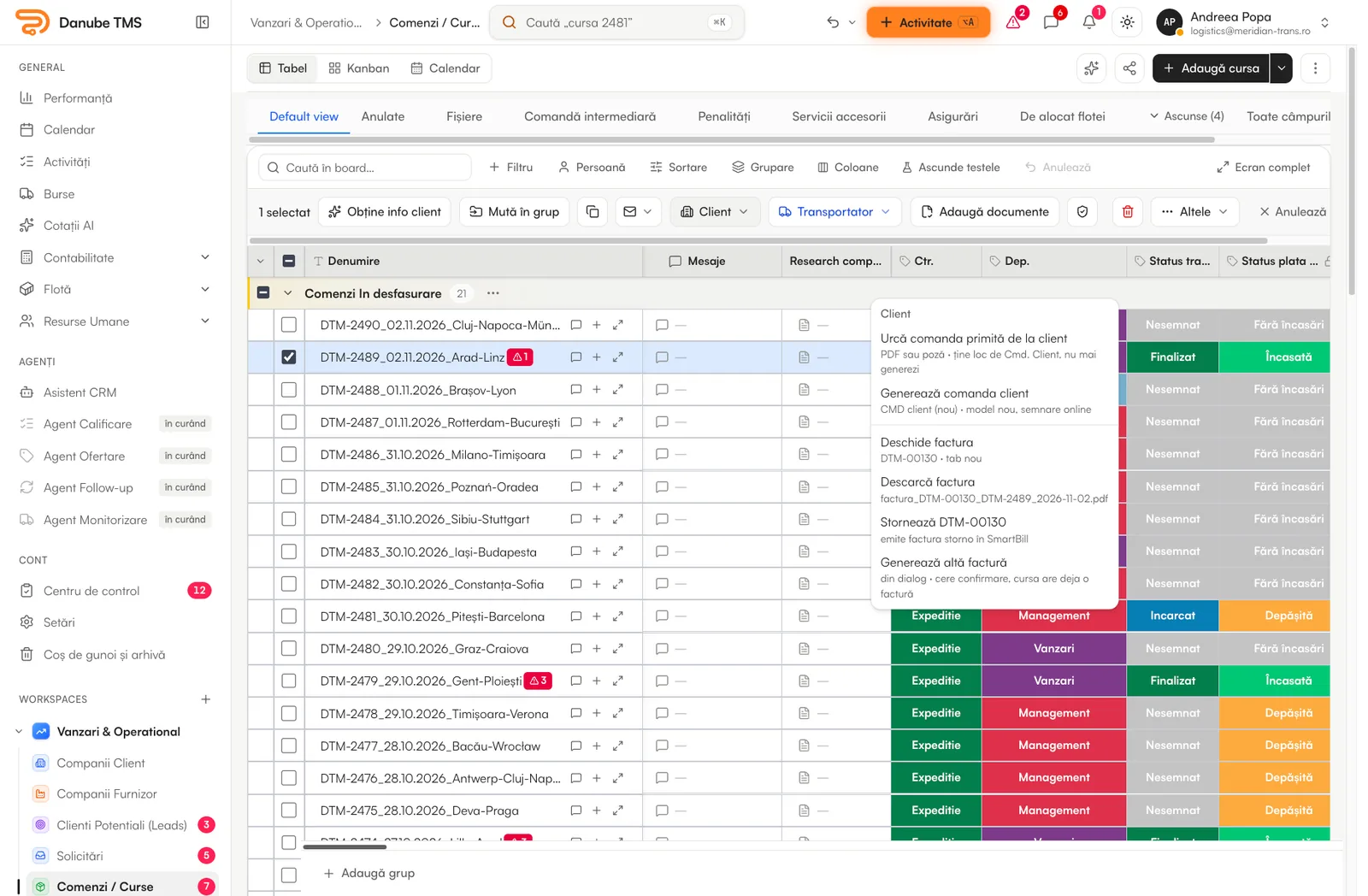
An order, a project or a case carries its documents, its approvals, its costs and its messages on one row. Each department sees the part that concerns it, and nobody types the same thing twice.
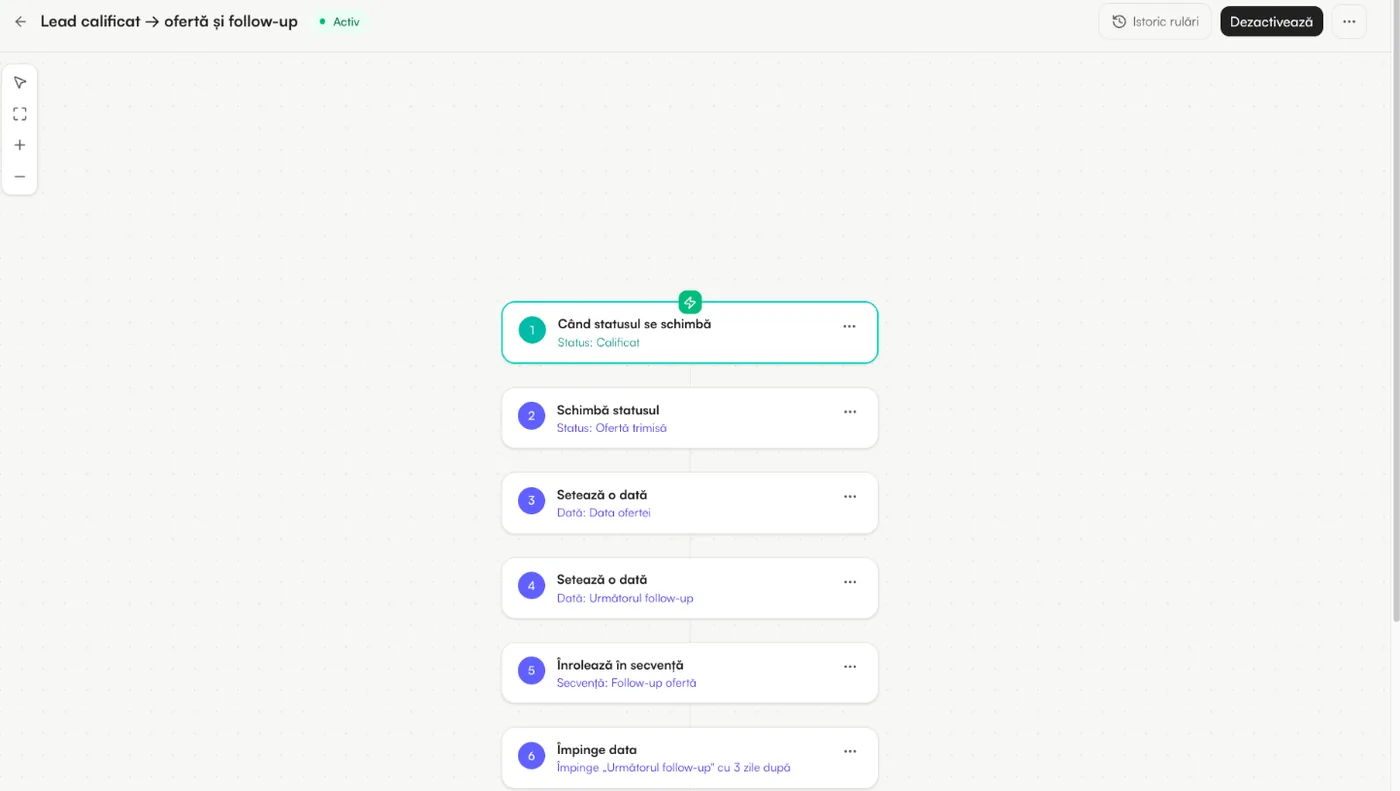
Rules and visual workflows move records, generate documents, send emails and create tasks. AI reads the documents and emails that today are retyped by hand.
Revenue, cost and profit come from the operational records themselves, so the report and the reality cannot drift apart. Data is available to your BI through exports or an API.
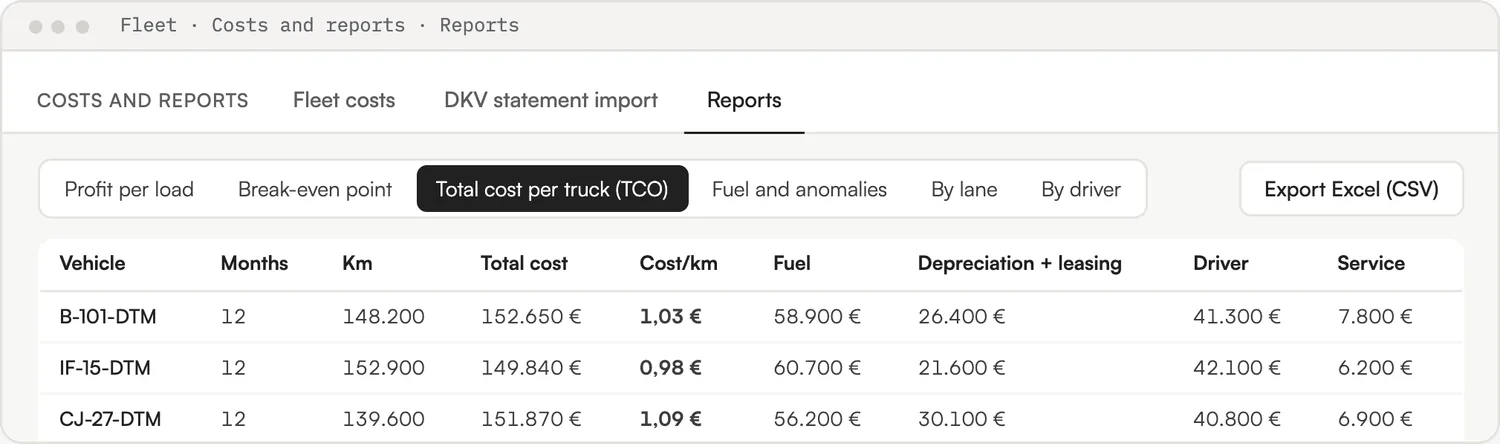
Screens are from the platform, with sample data. Some show the Romanian interface; the app also runs in English.
Enterprise terms
These are part of the offer, not extras discovered later.
A database, sign-in and file storage that belong to your company alone, in the EU region you choose.
SAML SSO with Microsoft Entra ID, Google Workspace or Okta, two-step verification and rights by role.
Agreed response times, a named contact and a support channel for your administrators.
A data processing agreement and answers to your security questionnaire before signing.
Scheduled backups and full export of your data, at any time.
A price tied to what the platform runs, not multiplied by every seat.
How a project runs
Workshops with each department: the process as it really runs, not as the manual says.
Architecture, integrations, stages, timeline and a fixed price per stage.
Built on your data, tested with your people, adjusted before the next stage.
Further departments and countries, with training and a support agreement.
Questions
No. The platform sits next to the ERP and exchanges data with it. The ERP keeps the accounting; the operational work moves out of email and spreadsheets into one place.
Any industry that runs on requests, orders, documents and approvals. Logistics is where we started; distribution, manufacturing, services and construction follow the same patterns.
A fixed price per stage for the build, and a monthly fee for the platform that depends on what it runs, not on the number of seats. Both are in the proposal before work starts.
We do, under a support agreement with response times. Custom work is built on the same platform we maintain every day, so it keeps working as the platform evolves.
You get a blueprint and a fixed proposal for the first stage, with no obligation to the rest.