Nobody has the whole picture.
Each department knows its own steps. Where the hand-offs break is known only by the clients who feel it.
Custom builds · Business & technology consulting
We map how your company really works, find where time and margin leak, and tell you what to fix with a setting, what to automate and what to leave alone. You get a plan you can execute, with us or with anyone else.
Why companies ask for advice
Each department knows its own steps. Where the hand-offs break is known only by the clients who feel it.
You ask what you need; they answer what they sell.
Without a concrete task and a way to measure it, an AI project is a demo that never reaches the daily work.
What we do
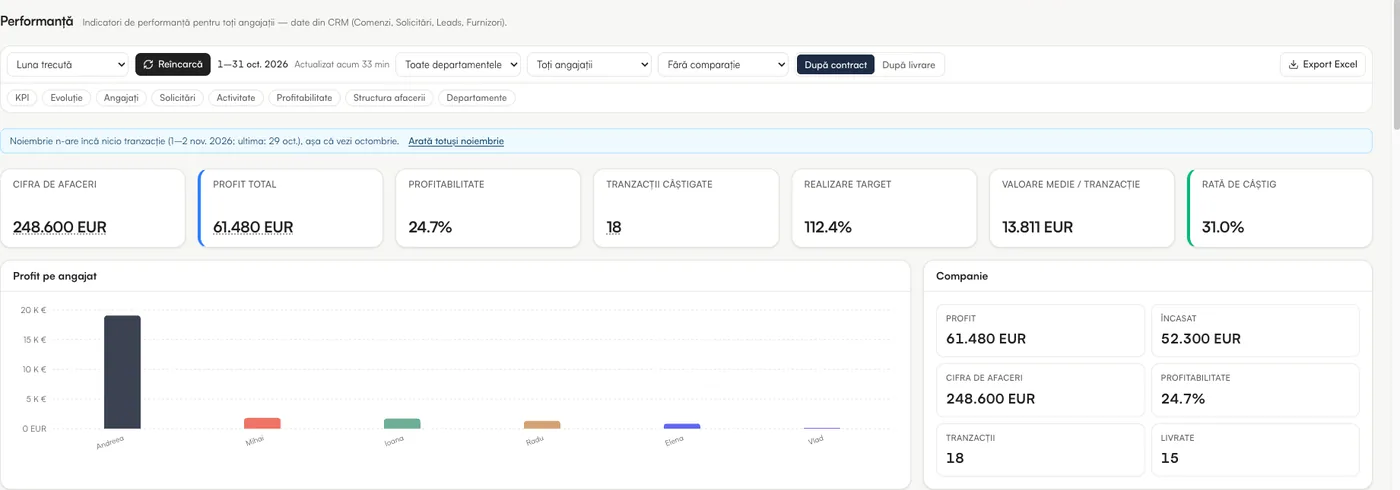
Revenue, margin and workload per client, per colleague and per stage show where the effort goes and what it brings back. Decisions follow the numbers, not the loudest opinion in the room.
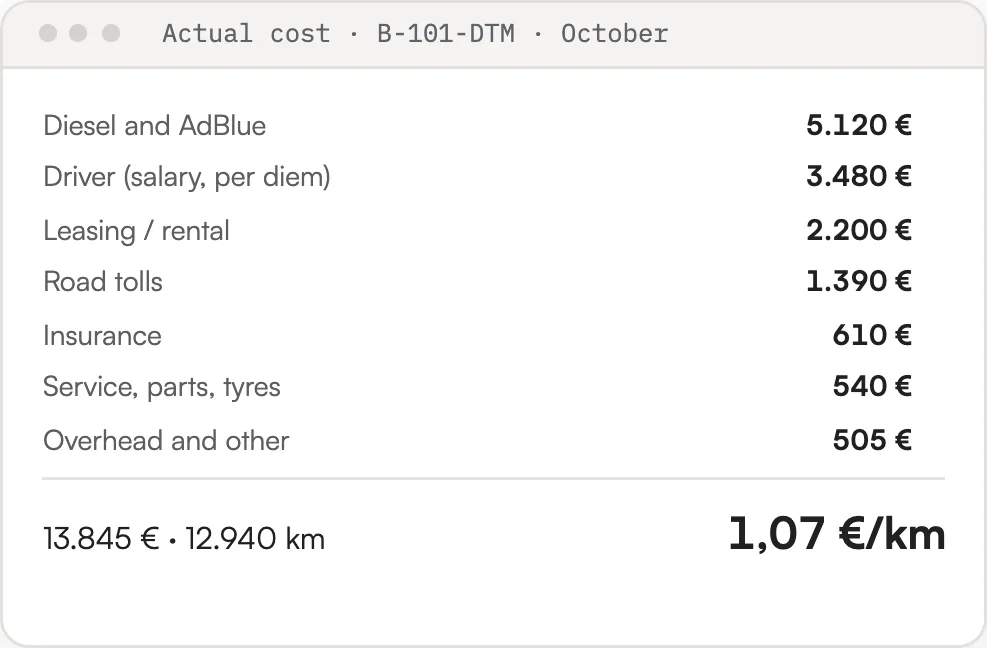
For a fleet, that is the cost of a kilometre; for a service team, the cost of a ticket; for sales, the cost of a won deal. We build the calculation with your finance team and leave it running.
We put the target process on a canvas: who does what, what triggers the next step, what is automated and what stays with a person. The same drawing becomes the specification for whoever builds it.
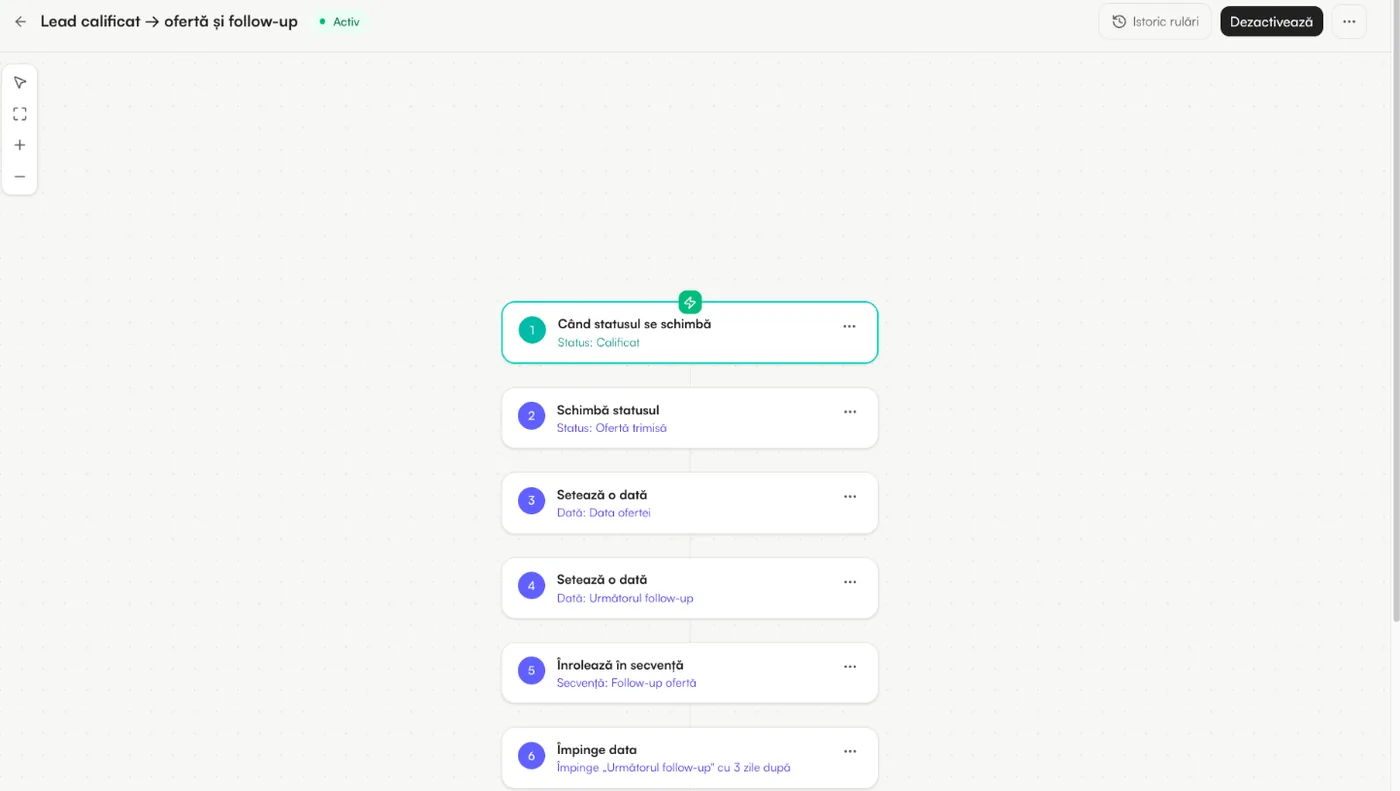
Screens are from the platform, with sample data. Some show the Romanian interface; the app also runs in English.
Typical engagements
Each has a fixed scope and ends with a written result.
Whether to replace a system, extend it or leave it, with the cost of each road.
A ranked list of tasks, with the hours each one returns.
Which tasks suit AI today, which data they need and what must stay with people.
A cost and pricing analysis on your own records.
Roles, targets, rotation and the reports that make them fair.
A migration plan: data, parallel run, training and the day of the switch.
How an engagement runs
The question, the people involved and the data we may look at.
Interviews with those who do the work, and a look at the real records.
What we saw, with numbers, presented to the people who decide.
Steps, owners, order and estimated cost, yours to execute.
Questions
No. If a setting in the software you already own solves it, that is the recommendation. The plan is written so that any competent team can execute it.
A focused question usually takes one to three weeks. The scope and the duration are fixed before we start.
From ten years inside freight, technology and logistics, building and running the systems we now sell. The method applies to any business that runs on requests, orders and deadlines.
Access to the people who do the work and, where possible, to exports of the real data. We sign a confidentiality agreement before we look at anything.
A first conversation costs nothing. You leave it knowing whether an engagement is worth it.